We operate a museum of ghosts and legends in the premises of a former ice plant where ice was stored for butchers and the Olešnice brewery. The museum contains mannequins of an executioner, a woman on the pillory, a groom, a bride in a coffin, a witch, a polednice, a wild woman and a witch. There is also a heykal, a wanderer, a waterman and a devil.
The museum tells the history of machine lace. In the museum you will find a unique collection of technical curtain designs and lace patterns, covering the period from the end of the 19th century to the present day.
The Schindler's Ark was a concentration camp in which 1,200 Jews from Schindler's List were rescued, as mentioned in Stephen Spielberg's film. Schindler's Ark was stolen by the Nazis from the Low-Beer family in 1938.
We run a museum with an exhibition depicting rural life in the first half of the last century. Mainly farm machinery and tools are on display, but also a display of rural living including household furnishings.
The memorial commemorating the victims of the Holocaust of the Roma and Sinti is located on the authentic site where the Protectorate's so-called Gypsy camp operated between 1942 and 1943. The exhibition is dedicated to the period 1940-1950, when various types of camps, including the so-called Gypsy camp, internment camp and TNP, were established on the site.
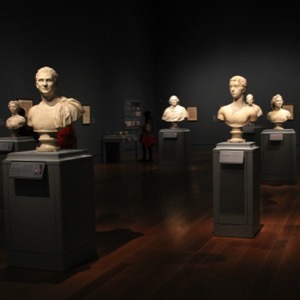
The museum has two parts in the first part there are photographs and objects related to the history of the village and its surroundings, mining activities (especially graphite mining) and the later development of industrial production.
Visitors have the opportunity to see samples from the surface of the earth as well as from a depth of 4 km in one place. Minerals from all five continents are dominated by exhibits from the nearby Bohemian-Moravian Highlands. However, the discovery of heliodor, a variety of beryl, in Rožná is absolutely unique.
We operate a cartographic center that offers map and surveying exhibitions. The exposition deals with the development of cartographic representation of Bohemia, Moravia and Silesia. The central exhibit of the cartographic centre is a relief map of the historical lands of Moravia and Silesia.
We run a museum with an exhibition of folk art and shoemaking, which was the most widespread craft in Bystrý in the 19th century. The exhibition also includes a painting by the Venezuelan painter Maica Gonzales, who donated it to the town.
The museum continues the tradition of the local museum association, which was founded in 1905. It provides professional research and collection activities, especially in the fields of archaeology, history and ethnography.