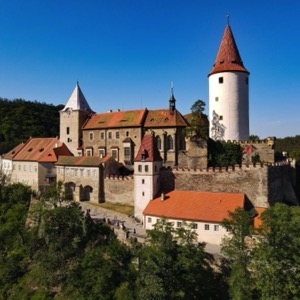
Pátek Castle was originally a summer palace built between 1544 and 1557 by John the Younger of Lobkowitz, one of the richest noblemen in the Czech Kingdom. It is one of the first purely Renaissance buildings in Bohemia. Towards the end of the 17th century it was rebuilt in Baroque style and surrounded by a farmyard.
Exposition of folk architecture. The youngest open-air museum in Bohemia, its foundation is an old historical village in the lap of the hills of the Bohemian Central Highlands.
In the building of the former municipal weighing scale there is a permanent exhibition dedicated to the deportations of Jews to Terezín and the deportations from the Terezín ghetto to the labour camps and especially to the extermination camps. The exhibition is not open all the time and can only be visited by appointment.
The exposition called Snippets of History will non-violently take visitors away from the reality of an over-technologized world and draw them into a world of captivating stories. At the next exhibition, you will stand on the banks of the region's largest body of water, the Velký rybník nature reserve.
Discover the forgotten story of the town and the fortress. Explore fortification models, historical plans, paintings and centuries-old finds that will show you this city full of life and the fate of specific people. The local museum will guide you through the story of the fort from its founding to the early 20th century.
Permanent exhibition mapping the history of Duchcov and its surroundings. The history starts from the earliest times and includes an exhibition of archaeological findings from prehistoric times. The exposition also includes a presentation of historical film materials depicting the town of Duchcov.
Rotunda restored in 1126 by Prince Soběslav I and consecrated by Bishop Jindřich Zdík of Olomouc. The dynamic building with a cylindrical tower is a unique achievement in Europe.
Late Gothic church built after the fire of the town in 1515 according to the plans of Jacob Heilmann of Schweinfurt. During the destruction of the old town of Most due to coal mining, the church was moved in 1975 by 841.1 metres. Around 17,000 visitors visit the church annually. More info on the website.