In the log cabins, you’ll find examples of how small farmers lived and managed their farms from the mid-19th century to the mid-20th century. The tour also includes unique historical artifacts related to water-powered machinery.
Discover the world of historic motorcycles and tractors in our museum. More than 500 exhibits await you, including 260 motorcycles, 90 tractors and other unique machines and equipment. Come and enjoy an unforgettable ride into the past. We look forward to seeing you.
We run a literary museum. We provide protection of museum collections. We acquire, permanently preserve, process and make accessible collections of documents on the development of literature in the Czech lands.
The Stone House is a veritable treasure trove of Kutná Hora’s art and craftsmanship. Visitors can explore the reception rooms of the town’s bourgeoisie as well as the kitchens. A highlight of the visit is the descent into the two-story Gothic cellars with their lapidarium. Here, you can also enjoy the game “The Hidden Dowry,” inspired by KCD II.
A unique set of buildings with a closed courtyard and picturesque surrounding landscape offers a wonderful environment to relax and rest in harmony with nature. We offer accommodation, rituals, herbal baths and tranquility. The area is a registered cultural monument and is undergoing gradual renovation.
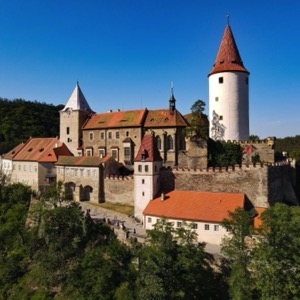
A beautiful Gothic complex in South Bohemia. Discover St. Nicholas Chapel—the jewel of South Bohemian Gothic architecture—a fascinating anamorphic portrait of Tomáš Krýza by visual artist Patrik Prošek, exhibitions, concerts, and the revitalized Paradise Courtyard with a kinetic fountain by academic sculptor Fr. Svátek.
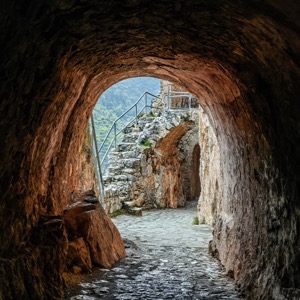
The story of Kutná Hora in one place, from a medieval mine to a Gothic palace. Discover the City of Silver, its history, and the lives of its residents. A visit to the medieval mine is one of the highlights of any trip to Kutná Hora. If you enjoy historical sites, don’t miss Hrádek, featuring the earliest examples of Renaissance architecture in Bohemia.
The church stands in the centre of the village on the site of an old church, which is mentioned as early as the 14th century. The first church was a branch church, it fell under the parish of Štock and already before 1367 it became a parish church under which other villages - Dobronín, Německý Šicndorf, Střítež, Pávov, Zborná etc.
The museum depicts the life of small artisans during the 19th century. Today you will see the dwellings of a weaver, a toy maker and a factory worker with a shoemaker's workshop. Since the end of 2018, the museum is part of the National Museum of Nature.
We offer tours of a declassified bunker from the 1970s. The former military facility served as a strategic telephone exchange. It used to house communications cables. The flagship cable was designed to carry up to 1,920 calls at a time and provide communication between Warsaw Pact countries in wartime. The building was top secret.