This functionalist villa, designed by Ernst Wiesner for the family of textile manufacturer Alfred Stiassni, was completed in 1929 and occupied until 1938. The tour lasts about 50 minutes, capacity is 20 people.
History of Belsk to the 19th century. The museum was founded at the turn of 1906 and 1907. It was preceded by years of hard work by many amateur and professional enthusiasts, researchers and Czech patriots who had been active in the region since the 19th century.
We allow you to visit a rock dwelling carved into a sandstone rock. It is a whole farm with a room, hall, barn, cellar and granary. There is also a butcher's shop and other small outbuildings.
The Wittal family’s functionalist villa was built in 1932 based on a design by architect Heinrich Blum. Over time, the Wittal family home became the residence of Nazi officers, later of Communist city officials, and eventually an apartment building. The villa is currently awaiting a complete renovation.
Historic rural building where wire and various agricultural tools were produced. In the residential building there is an exposition of forestry. Guided tours are offered in the building.
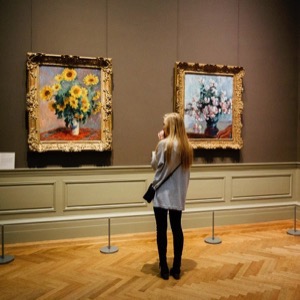
The icon of Czech functionalist architecture is home to collections of art from the 19th century to the present, which include works by key Czech and international modern and contemporary artists. Since 2018, a gradual revitalization of the collection's exhibitions has been underway.
Organizing exhibitions and presenting collections of local and Russian art of the 19th and 20th centuries. We organize European Heritage Days. We offer sets of reproductions, so-called travelling exhibitions, for loan to educational and medical institutions and private individuals. We exhibit paintings, drawings, prints and sculptures.
The courtyard is an important evidence of the development of rural folk architecture not only in the Pilsen region. Since 2008 it has been a national cultural monument. Come and enjoy the rural idyll in the city.
Offering tours of the baroque complex. As early as 1696, Count Špork decided to establish a hospital for elderly veterans from the surrounding area on his Hradiště estate. After Špork's spa and residence began to grow on the left bank of the Elbe in Kuks, the opposite, right bank was chosen as the site for the future institution.
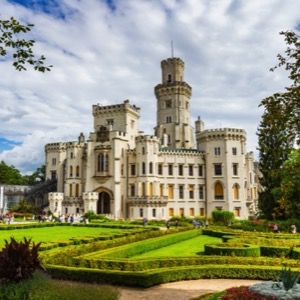
Valeč Castle is an important Baroque monument with a preserved urban and landscape context. The grounds include the castle, the Holy Trinity Church, a park and a lapidarium with a valuable set of sculptures by Matthias Bernard Braun. The complex shows a complex development from the glory of the noble residence, through fire to restoration.