


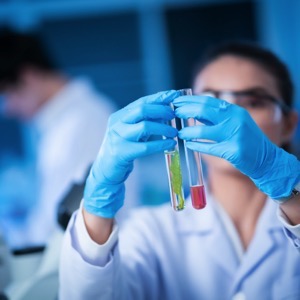
Thin layer chromatography methodology is designed to capture and identify large quantities of drugs and drugs as unknown nox in samples of biological material, or in substances, dosage forms or unknown liquids.
Thrombotic center provides diagnosis, dispensary and treatment of patients with disorders of hemostasis, monitoring of patients with thrombophilic conditions. Laboratory of hereditary defects of hemostasis performs special molecular genetic tests, platelet function tests.
The Thrombotic Center provides diagnosis, dispensary and treatment of patients with disorders of hemostasis, monitoring of patients with thrombophilic conditions. Laboratory of hereditary defects of hemostasis performs special molecular genetic tests, platelet function tests.
In the laboratory of trace analysis, sample preparation for LC-MS/MS, GC-MS and HPLC analysis is carried out, as well as the actual determination of some analytes on HPLC.
Thrombotic center provides diagnosis, dispensary and treatment of patients with disorders of hemostasis, monitoring of patients with thrombophilic conditions. Laboratory of hereditary defects of hemostasis performs special molecular genetic tests, platelet function tests.
The laboratory performs diffusing capacity lung testing, pulse oscillometry, specific bronchoprovocation tests, exhaled air condensate sampling and acoustic rhinometry. In addition, TURBO DECCS 09 portable exhaled air condensers, Rhinoscreen rhinomanometer and 504 pulse oximeter.
Processing of necropsies and staining of histological slides by classical methods used in pathology and anatomy departments. For forensic purposes, fat-stained cryostat excisions are made to demonstrate fat embolism to confirm the diagnosis of intravital violence on the human body.
In the gas chromatography laboratory, analyses of volatile organic compounds are carried out. This involves the determination of ethanol in blood (or urine) for medical or legal purposes.
GC-MS laboratory specialising mainly in the determination of blood levels of drugs and their metabolites, or the detection of these substances in other biological material.
Microscopic analysis is used to identify all known poisonous fungi and plants. The analysis is carried out in biological material (gastric lavage, high enemas, vomit, faeces), or the material analysed may be food residues.