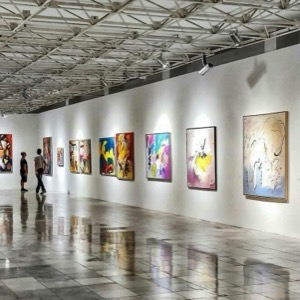
The studio of František Bílek is open to visitors in the villa. In part of the building there is a permanent exhibition which, in addition to the original interior furnishings, also presents Bílek's works from his peak creative period.
Organizing exhibitions and presenting collections of local and Russian art of the 19th and 20th centuries. We organize European Heritage Days. We offer sets of reproductions, so-called travelling exhibitions, for loan to educational and medical institutions and private individuals. We exhibit paintings, drawings, prints and sculptures.
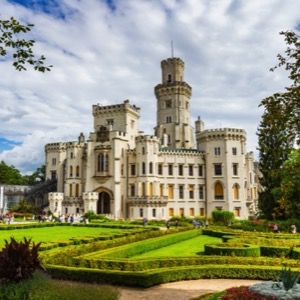
Chvalský zámek is historically the natural centre of the town, where exhibitions and events for children and adults are held. Now you can visit the interactive exhibition for the whole family Around the World in 80 Days. The history of the castle dates back to the early 15th century. It has undergone numerous modifications over time, until 2008.
Neo-Baroque chateau by the Nechranice dam. The sightseeing tour presents life in the country estate in the time of the First Republic. Throughout the year, there are also many cultural events with an accompanying programme.
Operation of a hunting lodge. We offer Baroque-style interiors, a feast hall with distinctive acoustics, a viewing gallery and a tower with an oval floor plan. On the first floor you can find a 16-metre high banquet hall with distinctive acoustics and on the second floor an observation gallery.
A unique park within easy reach of Prague. A national cultural monument and a UNESCO site. Collections of exotic and native trees, unique composition, 25 km of paths, 250 hectares of land. Part of the area is a botanical garden, expositions in the castle, Rybarna, Česká chaloupka, gallery. The headquarters of the Botanical Institute of the CAS.
Valeč Castle is an important Baroque monument with a preserved urban and landscape context. The grounds include the castle, the Holy Trinity Church, a park and a lapidarium with a valuable set of sculptures by Matthias Bernard Braun. The complex shows a complex development from the glory of the noble residence, through fire to restoration.
This part of the Terezín fortress system from the end of the 18th century served as a prison already in the times of the Habsburg monarchy. Among the prisoners at that time was, for example, Gavrilo Princip, the main executor of the assassination of the heir to the throne, F.F. d'Este, in Sarajevo in 1914.